
Fleur de lis Tummy Tuck
Abdominoplasty
Procedure:
- Significant excess skin after massive weight loss (>40–50 kg)
- Sagging of tissues in the vertical and horizontal axes
- Extensive separation of the rectus abdominis muscles
- Distortion of the torso contour with skin folds on the midline
- Hygiene difficulties, abrasions, recurrent inflammation in skin folds
- No results after classic abdominoplasty
- Planned pregnancy
- Uncontrolled chronic diseases (diabetes, hypertension, thyroid disorders)
- BMI above 30 – it is advisable to stabilize your weight beforehand
- Coagulation disorders, anemia
- Tendency to develop keloids or healing disorders
- Unrealistic expectations regarding aesthetic results
Effects of the treatment


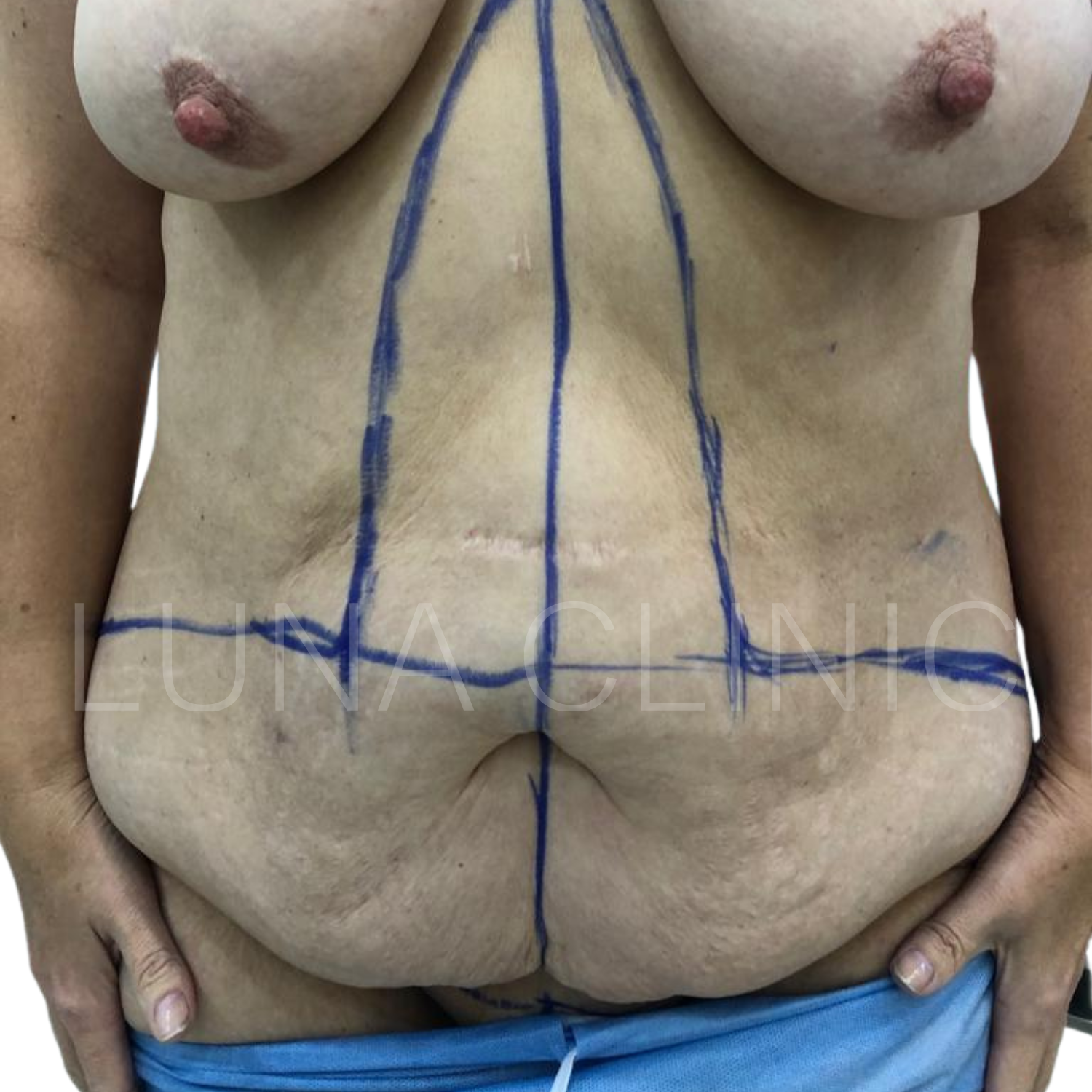
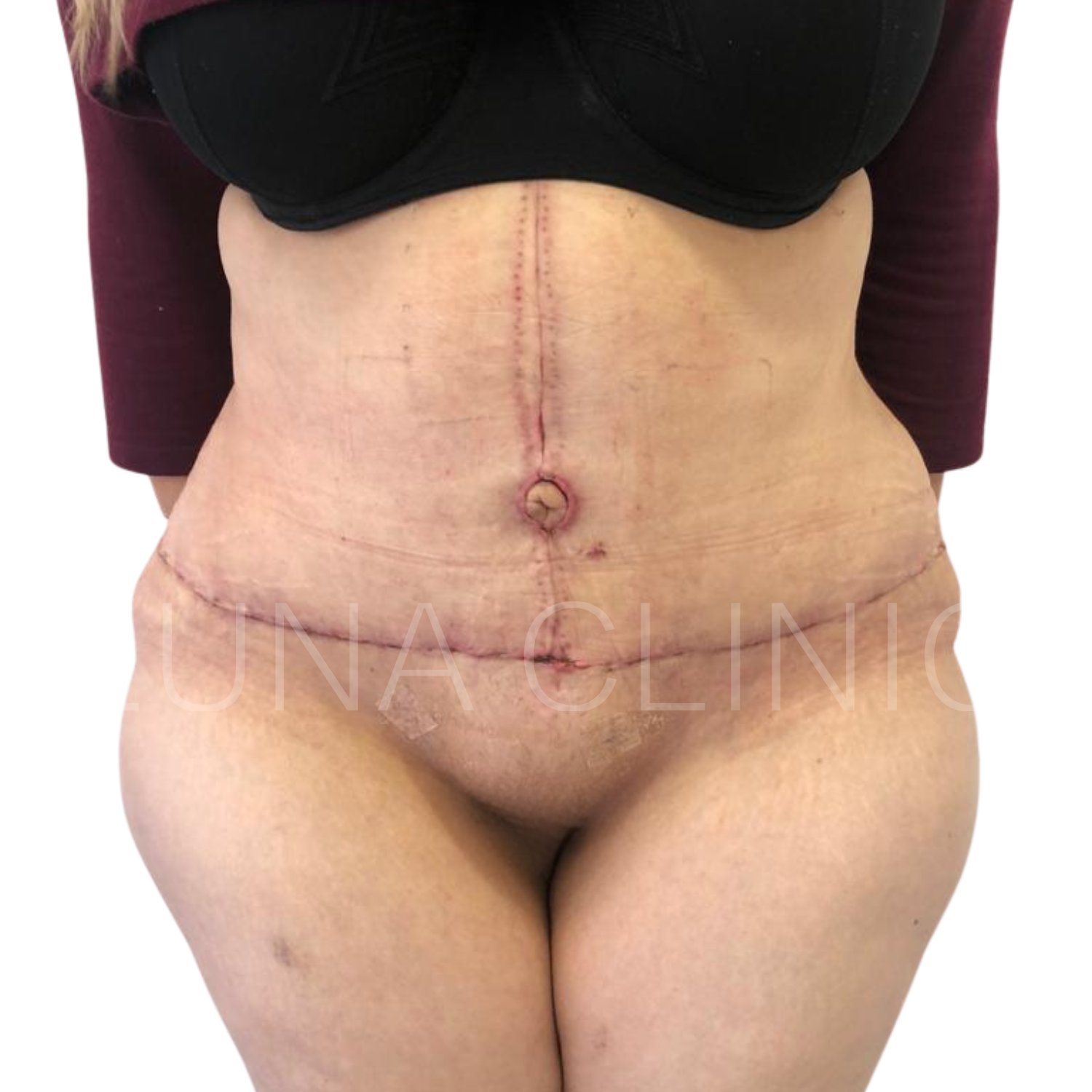
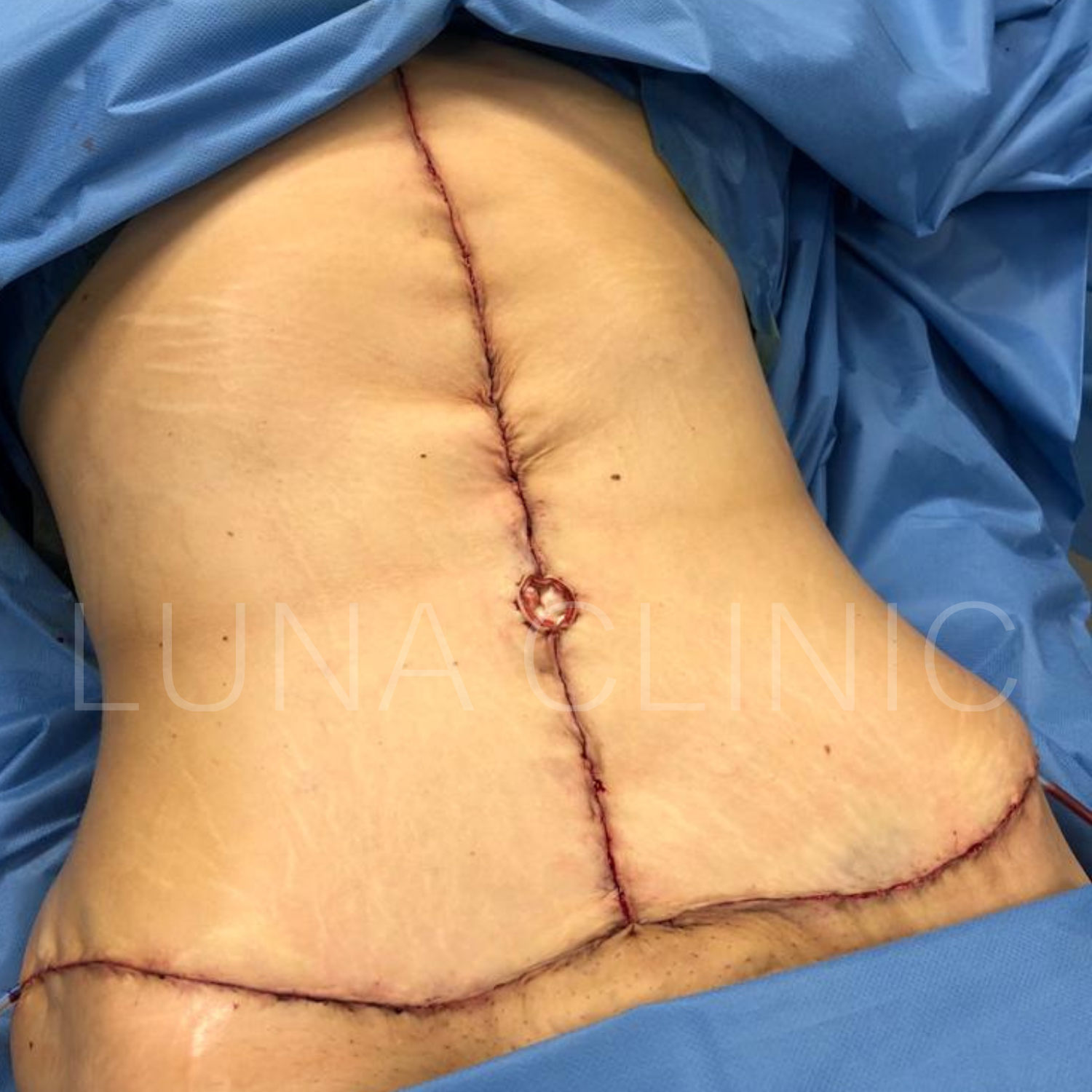
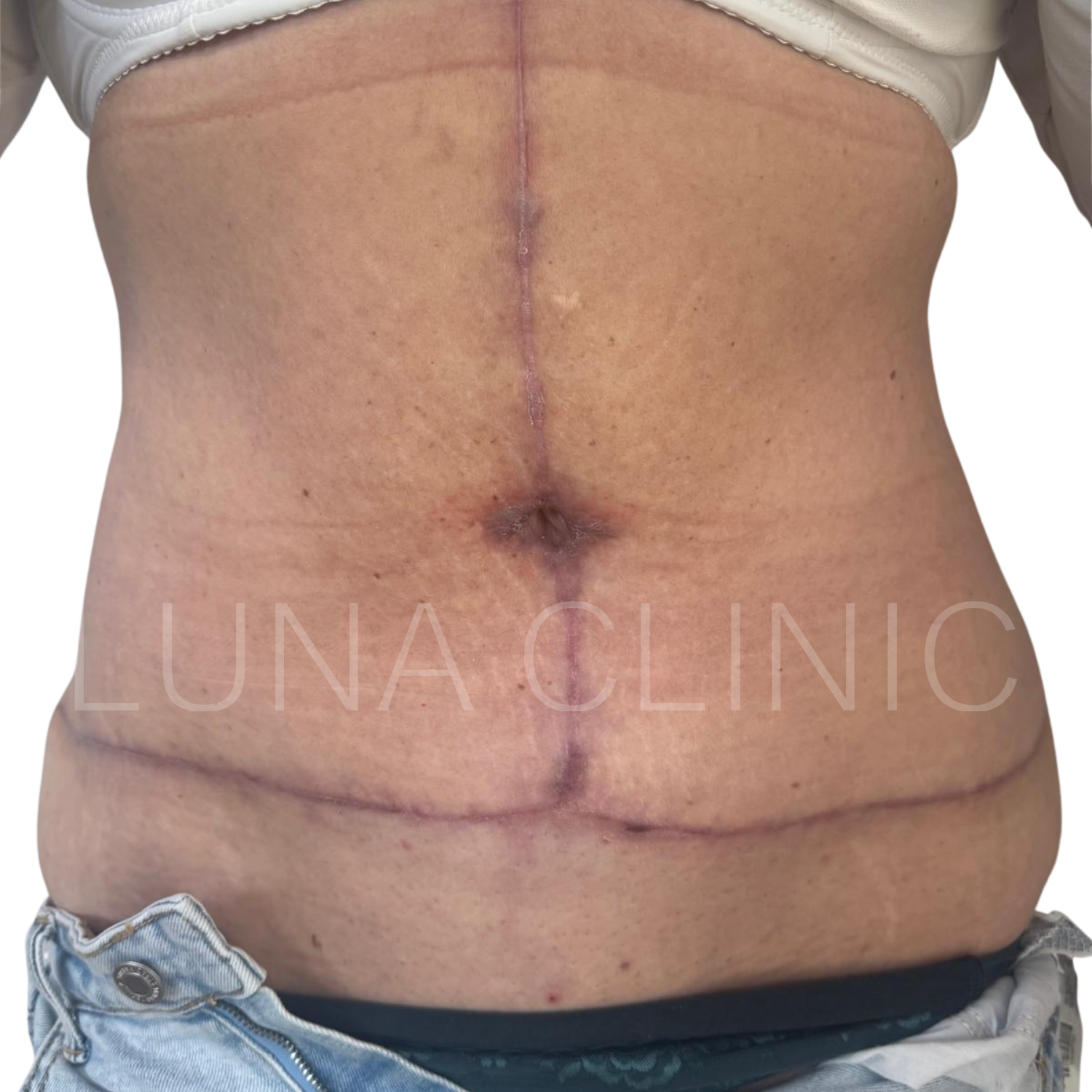
abdominal plastic surgery using the fleur de lis method (one month after surgery)
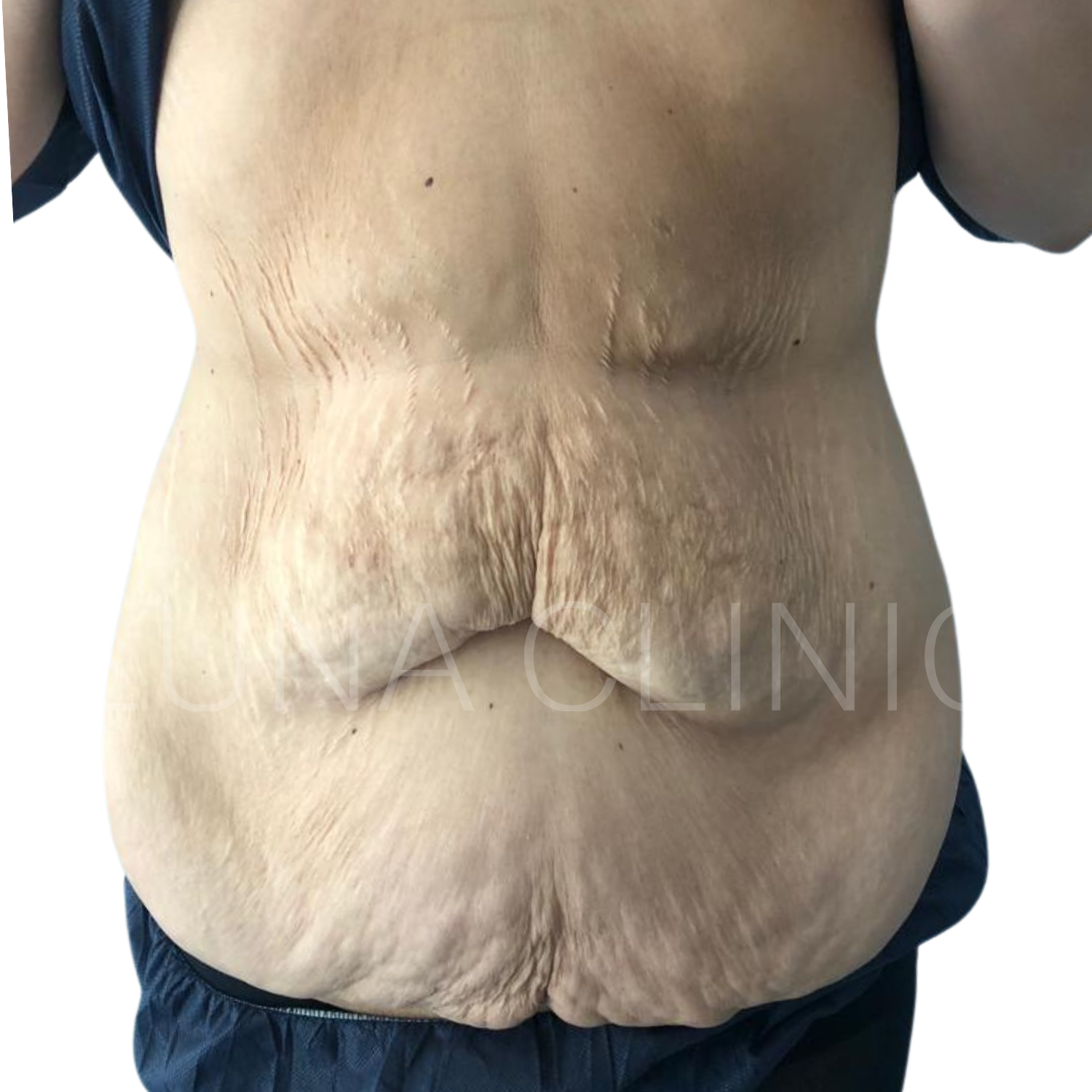

abdominal plastic surgery using the fleur de lis method (before and immediately after surgery)
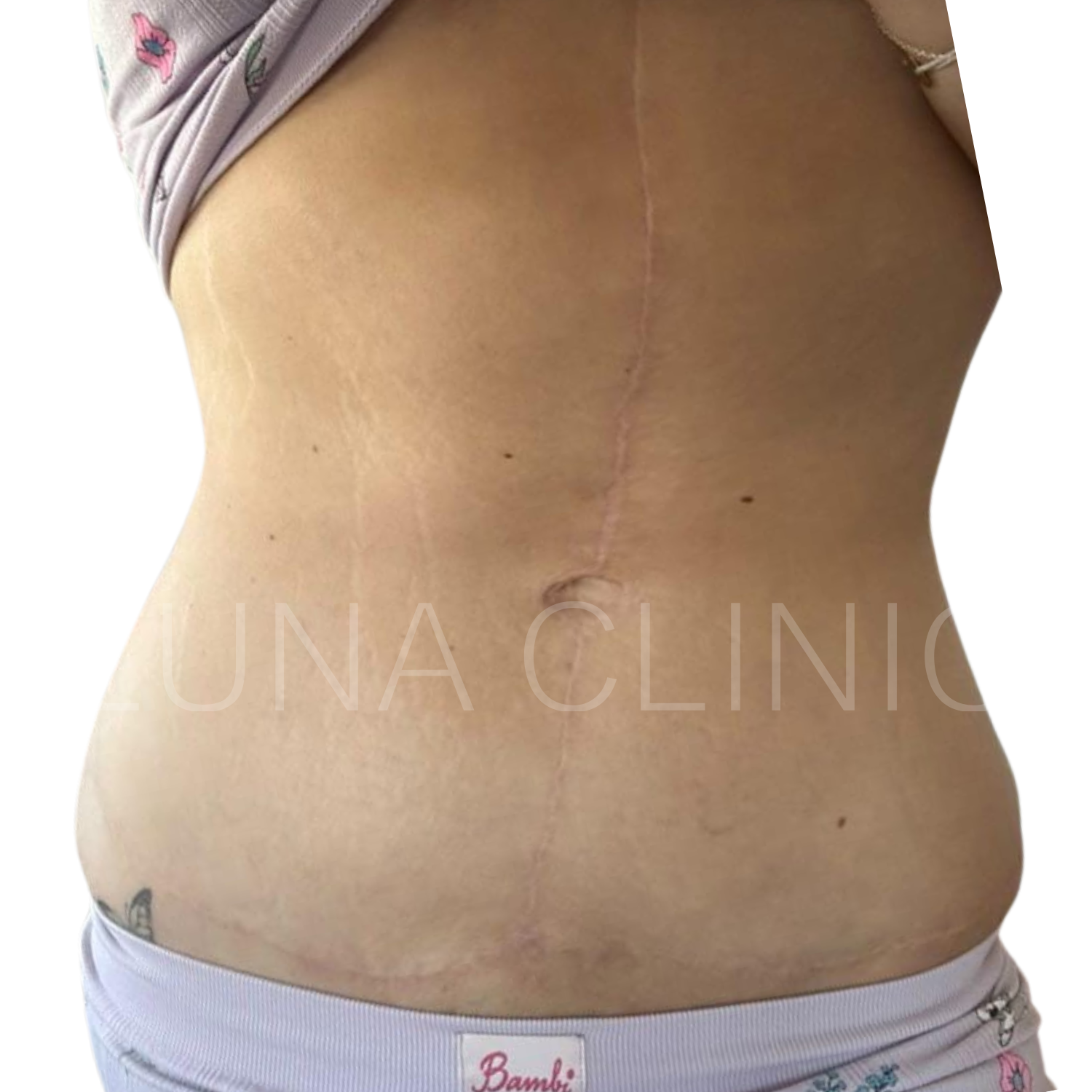

abdominal plastic surgery using the fleur de lis method (before and 7 months after surgery)
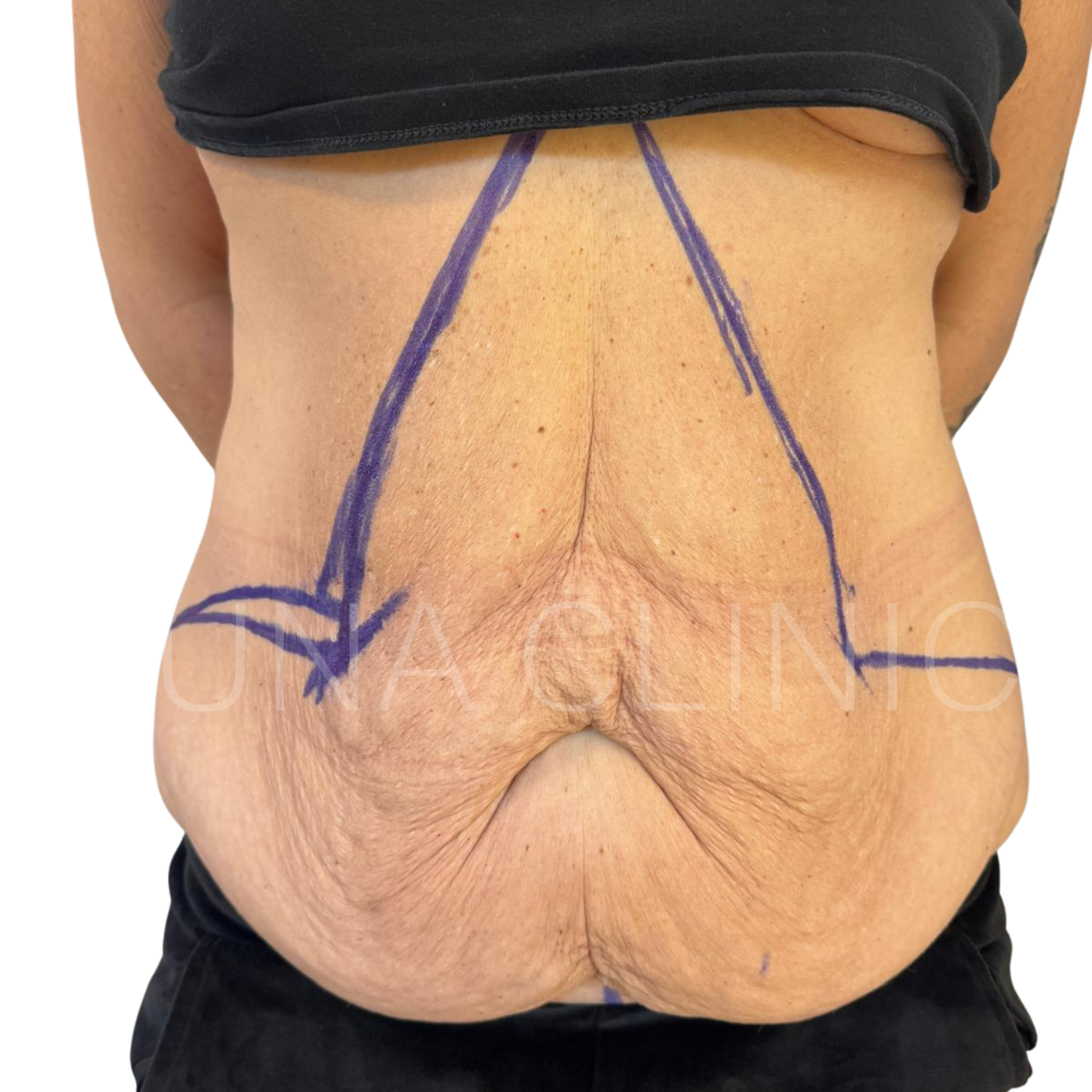

abdominal plastic surgery using the fleur de lis method (before and 3 months after surgery)
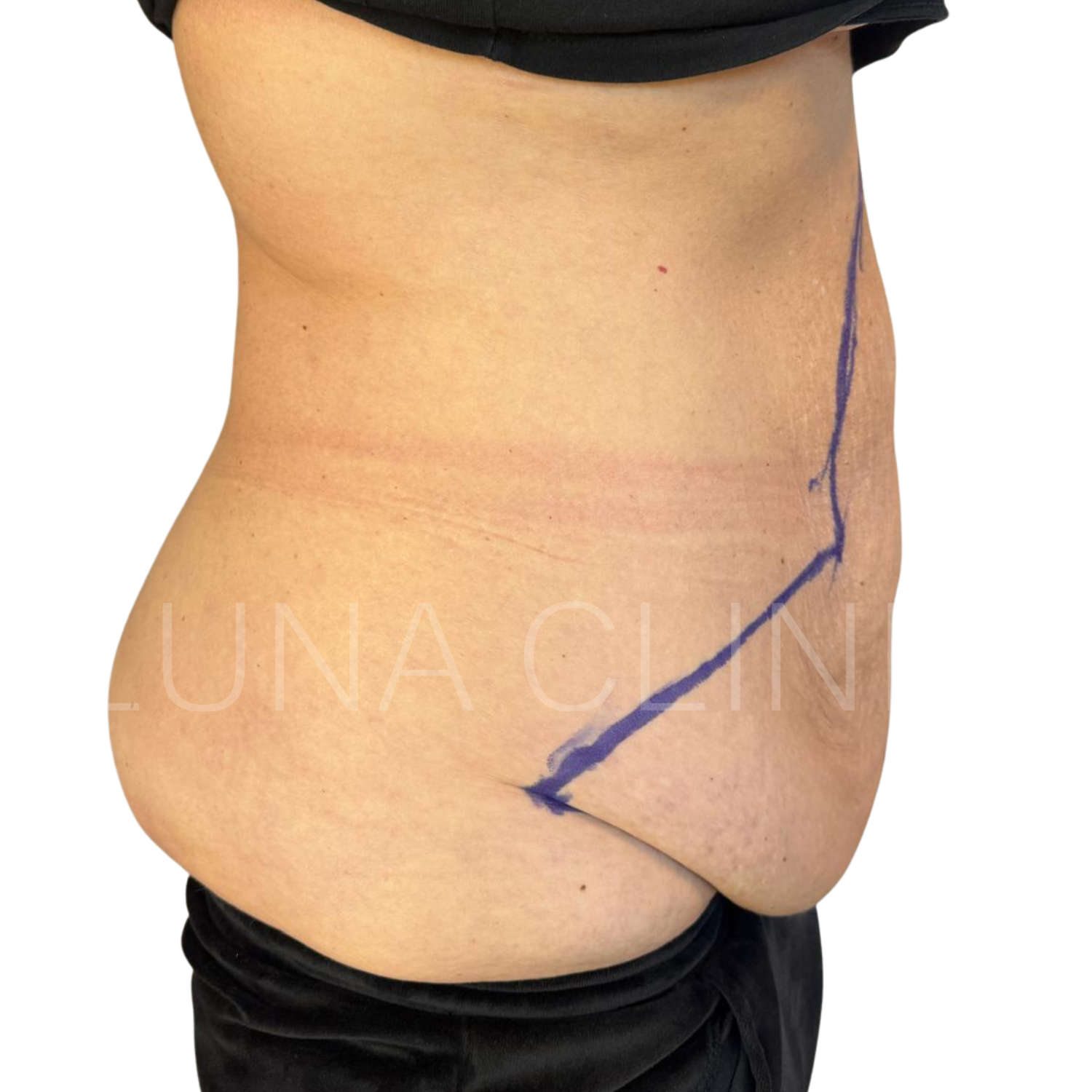
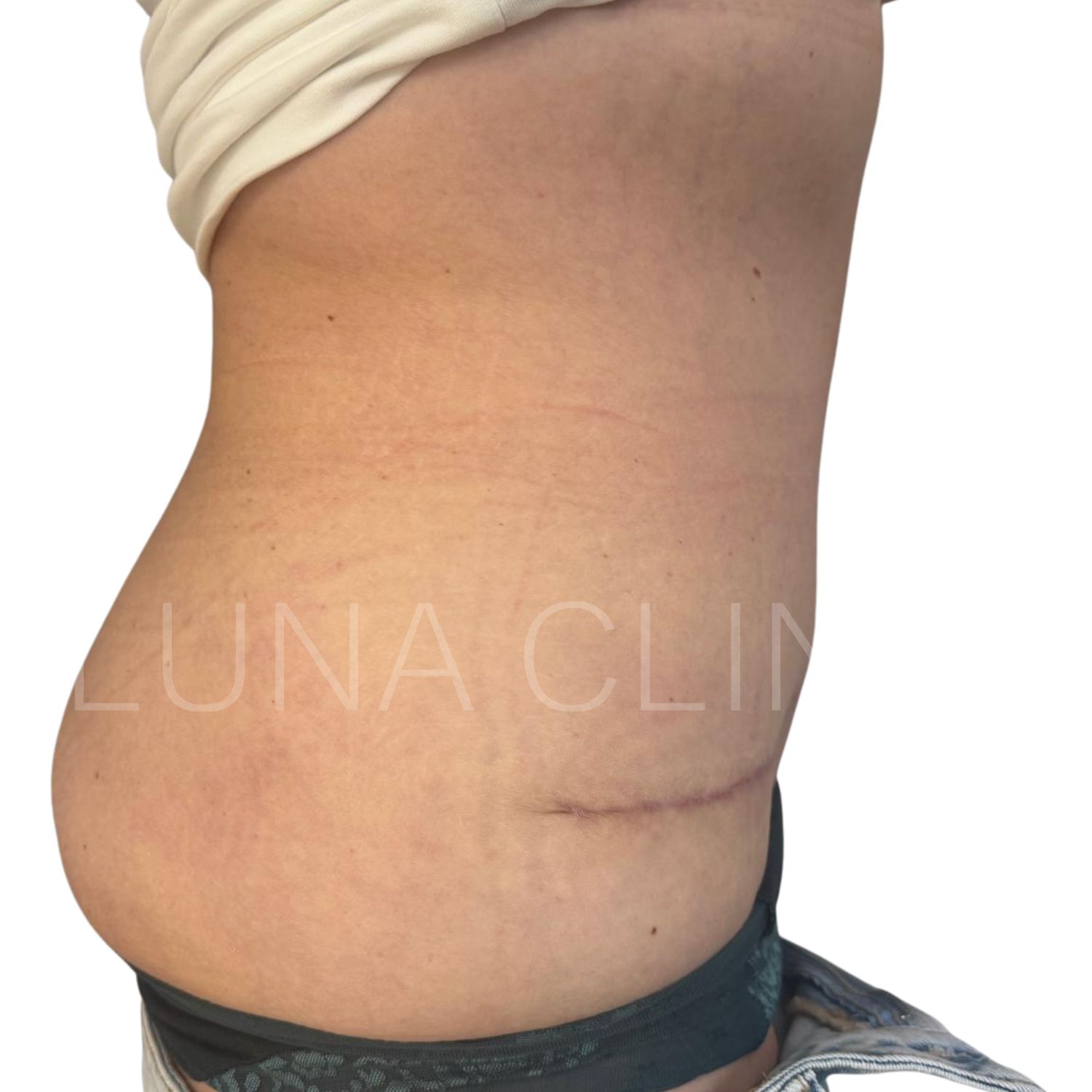
abdominal plastic surgery using the fleur de lis method (before and 3 months after surgery)
Preparation for the procedure:
Laboratory tests
Anesthesiology consultation
Discontinuation of drugs affecting coagulation
No smoking or alcohol for at least 14 days
W dniu zabiegu brzuch powinien być umyty, bez balsamów i preparatów kosmetycznych.
The course of the procedure
The operation is performed under general anesthesia and usually takes 2–4 hours.
The surgeon makes a horizontal incision in the lower abdomen and an additional vertical incision from the sternum to the pubic symphysis.
Excess skin is removed in both directions, the rectus abdominis muscles are sutured, and the navel is moved to its anatomical position.
Drains and a pressure dressing are applied.
The stay at the clinic usually lasts 1–2 days.
Recovery and post-treatment recommendations:
Bent position (V) for 2 weeks, limited physical activity
Mandatory wearing of a compression garment for a minimum of 6–8 weeks
No lifting, intense exercise, or sun exposure for at least 6 weeks.
Massaging scars and applying preparations that support healing after approx. 4 weeks
Check-ups after 7–10 days, then after 1, 3, 6, and 12 months
Possibility of selecting compression garments at the clinic after healing
Possible complications and risks:
Hematoma, infection, necrosis of wound edges
Asymmetry or distortion of the navel
Prolonged swelling, sensory disturbances
Serous effusion, venous thrombosis (hospital prophylaxis)
Hypertrophic scar or scar difficult to conceal in the midline (the choice of incision technique is crucial)
Frequently asked questions
Our patients before this procedure
For people with significant excess skin – mainly after massive weight loss or bariatric treatment.
An additional vertical incision allows excess skin to be removed in the vertical axis – something that cannot be achieved with classic abdominoplasty.
The inverted T-shaped scar is larger than in a classic operation, but it is necessary to achieve the desired effect.
You can usually return to office work after 3–4 weeks. You can return to full physical activity after 6–8 weeks.
Sometimes yes, but we usually recommend a step-by-step approach.
The first effects are visible after a few weeks. You will have to wait 3–6 months for the final result.
Yes – during the procedure, we suture the linea alba if diastasis recti is present.
Pain after surgery is effectively controlled with medication.
Yes – while maintaining a stable body weight.
Yes—muscle suturing can improve torso stabilization and posture.
Do you have any questions?
Get in touch with us
Władysława Syrokomli 46,
51-141 Wrocław
Mon-Fri: 09:00 - 17:00
Saturday - Sunday: closed
Call :+48 666 850 666